
Advanced ENT & Allergy is honored to welcome patients transitioning from Dr. Kuhn’s practice
We are honored that Dr. Forrest Kuhn has entrusted Advanced ENT & Allergy with the continued care of his patients following his retirement, effective March 8, 2026. After nearly 50 years of practicing medicine, Dr. Kuhn has shared that caring for his patients has been the most rewarding part of his career, and we recognize the meaningful relationships he has built with individuals and families across multiple generations.
As a reminder, Dr. Kuhn will no longer travel to provide care in Danville and Glasgow, Kentucky, after December 31, 2025. He will continue seeing patients at his Louisville office located at 3900 South Dupont Square, Suite A, Louisville, KY 40207, through March 8, 2026.
Beginning March 9, 2026, Advanced ENT & Allergy will provide ongoing, compassionate care for patients transitioning from Dr. Kuhn’s practice. Our team includes board-certified allergists and immunologists with extensive experience in the treatment of allergy, asthma, and immunologic conditions. We are proud to serve the Kentuckiana region with comprehensive resources and a strong commitment to patient-centered, state-of-the-art care.
As of March 9, 2026, your protected health information will be maintained by Advanced ENT & Allergy according to our normal record-keeping procedures and will be available at 2944 Breckenridge Lane, Louisville, KY 40220. If, for any reason, you need a copy of your records sent to you or to another provider, please let us know.
We are committed to ensuring a smooth and seamless transition of care. We appreciate the trust placed in us and look forward to continuing to support your health and well-being.
Primary Allergy Clinic Location
2944 Breckenridge Lane
Louisville, KY 40220
Other locations can be found here.
Allergy Resources For Patients
Inhalant Allergens
Inhalant allergens are substances that we breathe in and that can trigger allergic reactions in sensitized individuals. In the Kentuckiana area, seasonal pollen from trees, grasses, and weeds, as well as year-round indoor allergens like dust mites, mold, and pet dander, are common triggers for many people. An allergy test can pinpoint your triggers, after which we can provide treatment options based on your needs and severity of symptoms.

Types of Allergies
Inhalant allergies are the most common allergy, but there are a wide variety of allergens that can trigger an allergic reaction. These allergies can also be diagnosed with a comprehensive allergy test. They include:
Food Allergy
A food allergy is an immediate reaction caused by the immune system reacting to a protein in a food. Symptoms typically involve the development of hives, wheezing, difficulty breathing, vomiting, abdominal cramping, diarrhea, and low blood pressure. Some of the most common food allergens include peanuts, shellfish, fish, tree nuts, eggs, dairy, wheat, sesame and soy.
According to FARE (Food Allergy Research & Education), food allergy has a prevalence of 1 in 10 adults and 1 in 13 children in the US. The best way to prevent the development of food allergies is the early introduction of allergenic food into children's diets. This is especially important for children with severe eczema because this can increase their risk of developing food allergies. Treatment involves primarily avoidance. There are newer therapies that can reduce the threshold for a reaction, but as of now there is no cure for food allergy.
Stinging Insects
Allergies to stinging insects occur when the immune system reacts to the venom injected by certain insects when they sting. These reactions can vary from mild irritation to severe, life-threatening reactions like anaphylaxis. Common stinging insects that cause allergic reactions include bees, wasps, hornets and yellowjackets.
Drug Allergies
Drug allergies occur when the immune system reacts to a medication. Symptoms can range from a mild skin reaction, like hives, to severe reactions such as anaphylaxis or severe skin rashes (e.g. Stevens-Johnson Syndrome). Common triggers include antibiotics, like penicillin or cephalosporins, sulfa drugs, and NSAIDs/aspirin.
About 10% of patients report an allergy to penicillin, while 90% of these patients are found to not have a true allergy to penicillin after all. For people who have had reactions to penicillin in the past, 10% outgrow their allergy every year, with about 80-90% of patients completely outgrowing their penicillin allergy after 10 years.
Other Allergic Conditions We Treat
Asthma and eczema are chronic conditions that often have allergic triggers. With the right care, they can be effectively managed and symptoms significantly reduced.
Asthma
Asthma is a chronic condition where the airways become inflamed and narrow, making it difficult to breathe. Symptoms include wheezing, shortness of breath, chest tightness, and coughing, often at night or in the morning. Asthma can be triggered by allergens, smoke, respiratory infections, exercise, or temperature changes. Avoiding triggers and managing symptoms with medication can greatly improve your quality of life.
Eczema
Eczema, also known as atopic dermatitis, is a chronic skin condition that causes redness, itching, and inflammation. It often appears as dry, cracked skin and can worsen with exposure to irritants like soaps, certain fabrics, or environmental factors. Eczema is commonly linked to other allergic conditions such as asthma, allergic rhinitis, and food allergy. Eczema is more common in children, but can affect all ages. While it can cause significant disruption in quality of life, it can be effectively managed with the right skin care routine and medications.
Allergies and the Immune System
Allergies occur when the body’s immune system mistakenly identifies harmless substances, allergens, as harmful threats. To protect the body, the immune system releases a chemical called histamine, which causes allergic reactions.
Allergic reactions can vary in severity. Mild allergies typically result in symptoms like sneezing, itchy eyes, runny nose, mild congestion, and hives. These reactions can be uncomfortable but are generally manageable with medications and lifestyle adjustments. Severe allergies may lead to more serious symptoms such as difficulty breathing, low blood pressure, facial swelling, and severe GI upset (vomiting, abdominal cramps, diarrhea).
Getting tested is the first step in identifying an allergen and developing a treatment plan. Depending on your case, your doctor might recommend lifestyle adjustments, medications or more advanced treatments.
Allergy Testing In Louisville and Kentuckiana
Our allergy testing services are available at all Advanced ENT & Allergy clinics in Louisville and the Kentuckiana area. Learn more about available procedures and what to expect. Please note that some medications, including antihistamines and certain nasal sprays, should be avoided before testing, as they can interfere with the results. Take a look at our list of medications to avoid before testing.
Intradermal Testing
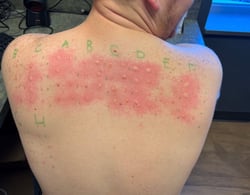
Our skin testing is done mainly on the back and upper arm and involves placing a small amount of antigen under the first layer of skin, creating a “wheal”. The wheal is timed for 15 minutes and then measured. We offer a numbing cream that can be applied one hour before the testing appointment to help alleviate any discomfort during testing. If your child is scheduled for surgery (ear tubes, tonsillectomy, or adenoidectomy) we can skin test while they are under general anesthesia.
Skin Prick Testing
Skin Prick Testing is a common method used to diagnose allergic reactions to inhalant allergens like pollen, dust mites, mold, and pet dander. During the test, small amounts of potential allergens are applied to your skin, typically on your forearm or back. A tiny needle is used to gently prick the skin’s surface, allowing the allergen to enter the skin. If you’re allergic to a substance, you’ll see a small raised bump or "wheal" at the site of the prick, similar to a mosquito bite. This reaction usually occurs within 15 to 20 minutes.
Blood Testing
Allergy Treatments in Louisville, KY
Advanced ENT & Allergy offers a range of treatment options to help you manage your allergies and find relief. Many symptoms can be managed with avoidance and medication (both over-the-counter and prescription), but immunotherapy might be a better choice for patients with more severe allergies or those interested in a long-term solution.
Avoidance
Medication
Immunotherapy
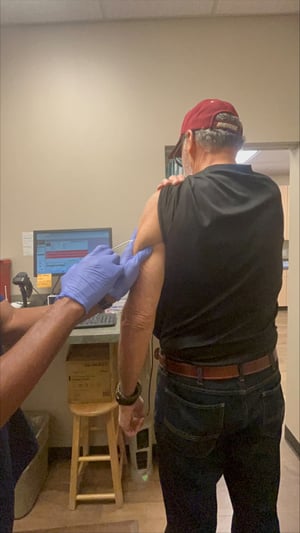
Immunotherapy is a long-term treatment that works by gradually desensitizing your immune system to specific allergens, reducing the severity of allergic reactions over time. There are two main types of immunotherapy: allergy shots (injections) and sublingual therapy (allergy drops or tablets). Allergy shots are given weekly over several months but are eventually spaced to monthly, while sublingual therapy involves taking drops or tablets under the tongue daily at home.